CKE
The new year clicks over. Rain-dependent rivers start to flow. Group texts light up. And across the Southeast, a familiar mental math kicks in for a small crew of paddlers: Can I leave work early? Will the level hold? Is this actually happening?
Every winter and spring, those questions signal the arrival of Go Fast Days, a loose constellation of last-minute events that are definitely not races. At least not officially. They aren’t anything like the scheduled, dam-release staples that anchor the national calendar. Races like the Russell Fork, the King Of New York series, and the Ocoee are predictable, and that predictability pulls paddlers from around the world.
Go Fast Days do the opposite. Their last-minute nature almost guarantees the field stays local. These are the folks who know the river when it’s bony and when it’s firing, who sneak laps before work or squeeze one in before dark. Go Fast Days are rain-fed rituals, the kind that quietly hold Southeast paddling communities together through the cold months.
What makes these events local isn’t just geography; it’s constraint. Jobs, daylight, and river levels decide who can paddle and when. Over time, those limits fracture paddling communities into parallel worlds that rarely overlap.
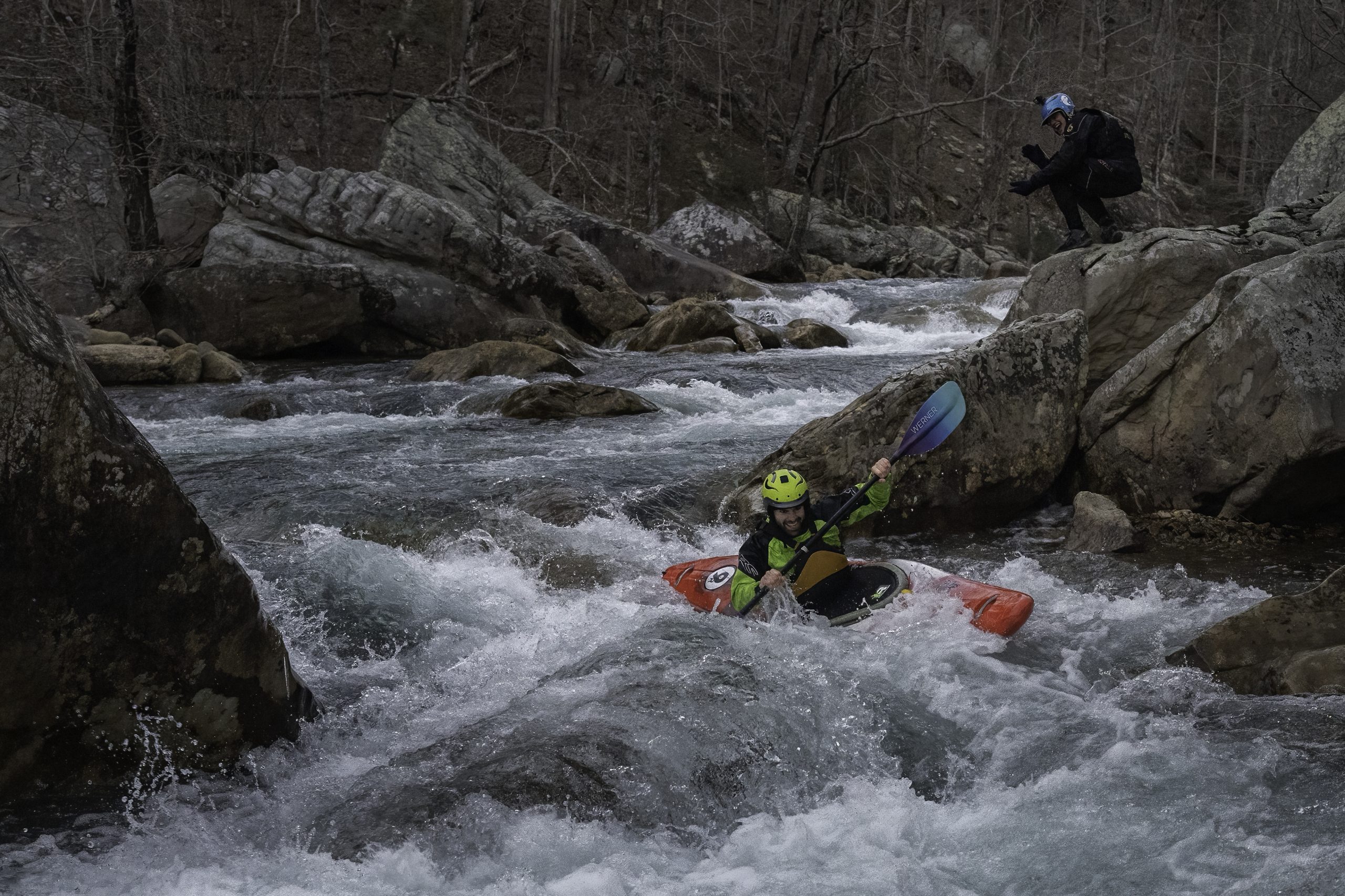
On many local runs, like Suck Creek in Chattanooga, Tennessee, you’ll see it clearly. There’s the dawn patrol crowd getting laps before work, the late-morning and early-afternoon crew, and the after-work chargers racing daylight.
Lucien Scott, former Suck Creek and current Bowling Alley organizer, lives squarely in that last window: an after-work sprint that starts around 4:30 p.m. and ends when the light’s gone.
“If you can’t be there at 4:30, I’m probably not paddling with you,” he said. “I need one lap, then I’ve got to go.”
Those constraints create micro-communities, tight crews that almost never cross paths.
Go Fast Days collapse all of that. They pull everyone to the same put-in at the same time. People who usually miss each other by hours suddenly share the same eddy. The river turns into a hub. That’s the magic behind events on Suck Creek, North Chick’s Bowling Alley, Daddy’s Creek, the Tellico for Ain’t Louie Fest, and the Chattooga in South Carolina.
“I want to see those people at least once a year,” Scott said. “If we can pick a time when most people can get there, that’s what brings the community together.”
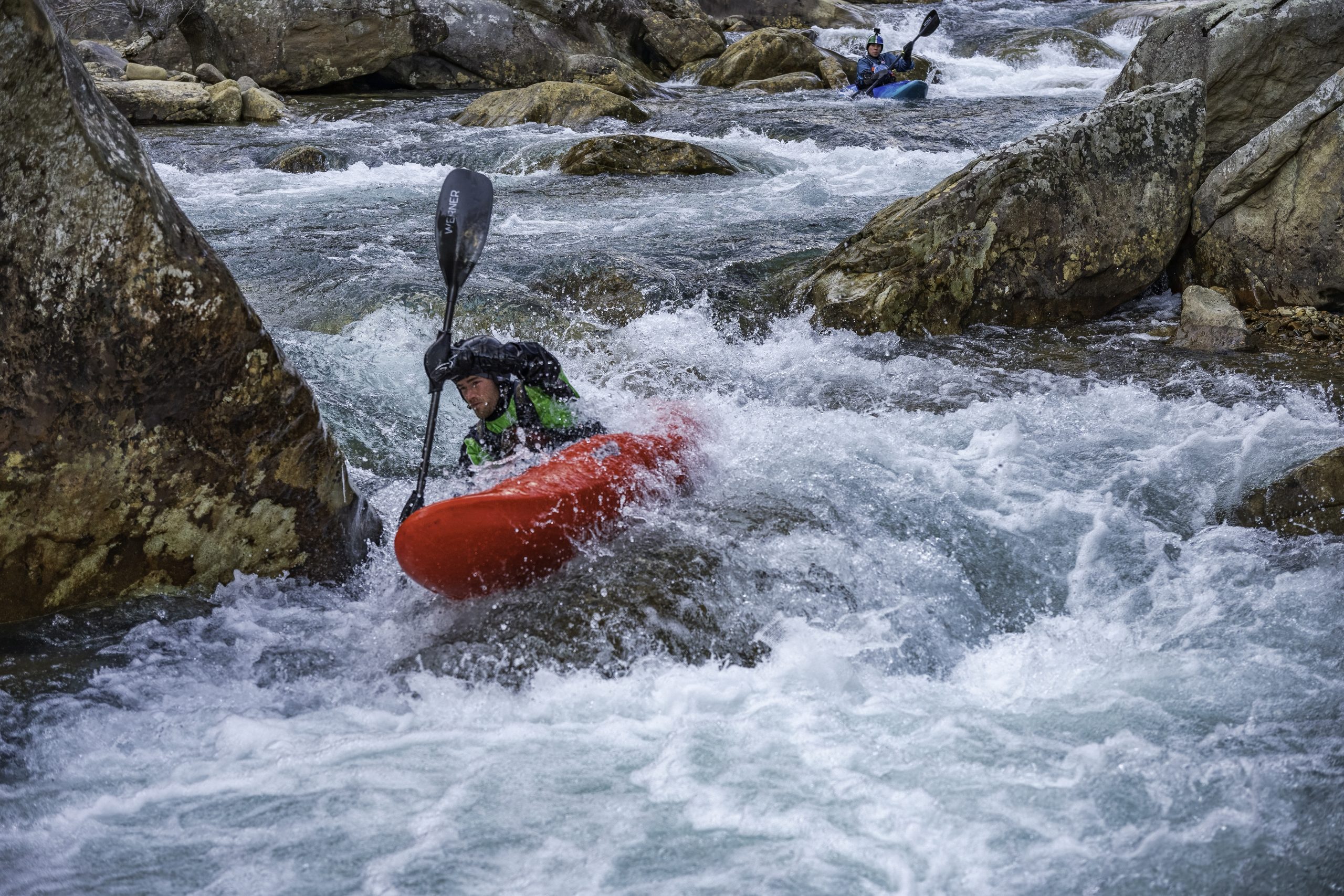
Once everyone’s in the same place, something else bubbles up: pride. Go Fast Days give paddlers a rare chance to measure themselves not against a national field, but against the people who know the run just as well as they do, who’ve styled the same lines at sketchy levels and blown the same moves.
“They’re personal races,” said Logan Kendricks, a South Carolina paddler with wins on the Chattooga and in the KONY series. “It’s people defending their home turf.”
“We see people wanting a reason to get together, line up, you know, share in camaraderie, talk a little shit, even. And it’s nice to see it, like, it’s kind of growing.”
For Kendricks, that home turf is the Chattooga. He won the race there last year. While living in Athens, Kendricks learned to ferry at the eddy line at Woodall, spending hours going back and forth across the rapid’s funky currents at the bottom. Back then, beating longtime Chattooga locals, the Long Creek crew, wasn’t even on the radar.
“I definitely didn’t have that on my bingo card, but it was a very validating experience, for sure,” Kendricks said. “So many variables you can’t control, even if you are putting in the time. So, it was validating to finally get something, you know, get a win under my belt.”
That validation hits different on rivers like the Chattooga, where history matters. Locals remember who showed up year after year, who learned the river when it was barely scraping by. Winning a Go Fast Day isn’t just about speed. It’s about belonging. Beating the clock comes second to beating the doubt, proving you’ve earned your place on that stretch of water.
If Go Fast Days are built on locality, they’re also built on shared uncertainty. Organizers and paddlers alike watch the same forecasts, refresh the same gauges, and ask the same question: Is this actually going to happen? For rain-dependent events, uncertainty is the biggest crux, especially when it comes to calling the day.
“Calling the shot on the race day is the bane of an organizer’s existence,” Scott said. “It’s such a stress level increaser. Say if it’s in, and it’s dropping, and the rain is done, okay? And while it’s going to be in when you guys make the call, is it really going to be running on race day?”
“And if the rain doesn’t fall, what do we do? Do we wait another week, or, you know, do we just go for it at a lower than preferred level?”
Most Go Fast organizers have landed on informal rubrics, guidelines, and more than rules. Call it a playbook. These events tend to work best when there’s clarity around timelines and river levels. Daddy’s Creek Go Fast Day, for example, happens on the first Saturday of the year that the creek runs between roughly 1.4 and 2.7 feet.
Suck Creek operates on four basic rules: it must be a weekday to prioritize locals; the creek must run all day consistently; after Daylight Saving Time; and the word must go out by 9 a.m. These aren’t official rules so much as shared agreements, an informal governance system that keeps stoke from tipping into chaos.
Building and maintaining that rubric is its own journey. As Scott put it, “It’s very complicated. You have to have enough people paddling consistently at the low and high ends of the spectrum to have a community consensus, which is hard to get”. What’s the lowest level you can still enjoyably run? What’s the highest level the general population should paddle solo? “Like, yeah, there’s the lowest and highest level a single person is willing to paddle down a run, but is that where the race cut-off should be?” Scott argued, probably not.
Once the rain starts falling, people get twitchy. Opinions fly. Group chats buzz. The main question is always the same: Is it on? Organizers lean on their guidelines to push back against peer pressure and impulsive calls. Having a rubric, flow ranges, and date windows, at least makes these events quasi-predictable.
Because so many variables shape them, Go Fast Days often fly under the radar. Many happen on government-managed land, like North Chickamauga Creek Gorge State Park for the Bowling Alley Race or the Catoosa WMA for Daddy’s Go Fast Day. That means permits are required. Insurance might be a tough ask when you can’t name the event date in advance.
The earliest Daddy’s Creek Go Fast Day can reliably be called is the Thursday before. Suck Creek is announced on the day of the event. That same uncertainty also shapes how organizers think about risk. When events live in a gray zone, public land, with no fixed dates, minimal infrastructure, risk management becomes cultural as much as logistical.
At Suck Creek, the last line of defense against serious liability is a sign-up sheet with rotating, deliberately ridiculous slogans:
“Poor decisions are the common thread in my fabric of life,” or “I love risking my own life for shits and giggles.”
Below that: names and numbers. The humor is the point. It signals awareness. It forces acknowledgment of risk, a paddling version of “hey y’all, watch this.”
“It was just some BS slogan that said, ‘Hey, this is blatantly a dumb idea, and I sign my name below this,” Scott said. “Because at the end of the day, there is liability for the person who is counting the spreadsheet or holding the stopwatch or the finish watch.”
For a few hours in the coldest months of winter and spring, local paddlers who usually miss each other line up in the same start eddy, talk a little trash, and run their home river as hard as they can. No chip timers, live streams or gopros needed. If kayaking is about one thing, it’s about community. Go Fast Days bring the whitewater family together.
This is what Go Fast Season is all about.
Leave a Reply